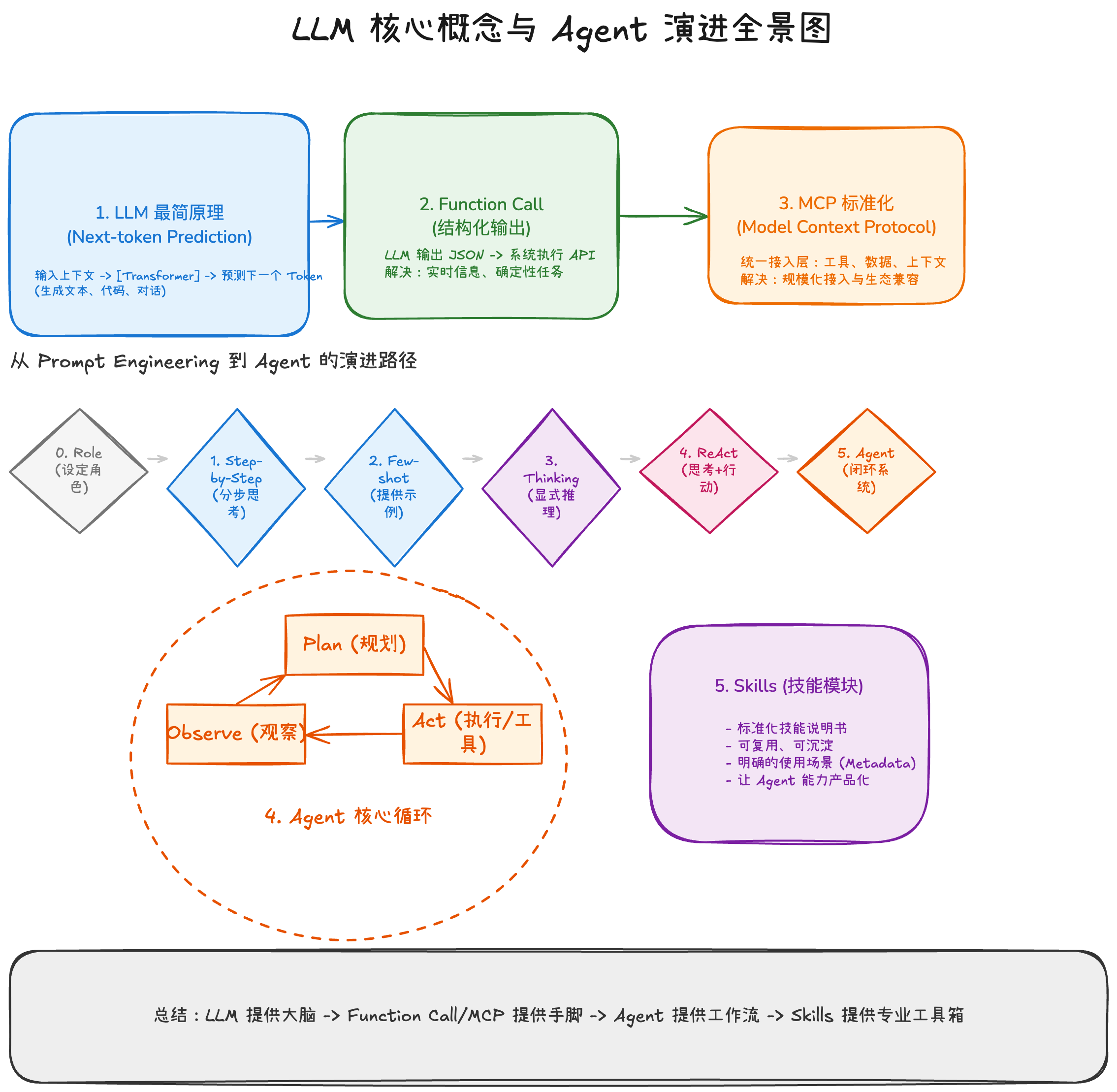
1. The Simplest LLM Principle: What Does It Do?
An LLM (Large Language Model) essentially does one thing:
Given context, predict what the next token is.
It keeps generating tokens and stitching them into text, which is why it appears able to “chat,” “write,” and “code.” The key underlying architecture is the Transformer, which relies on Attention (attention mechanism) to dynamically focus on key information in the context.
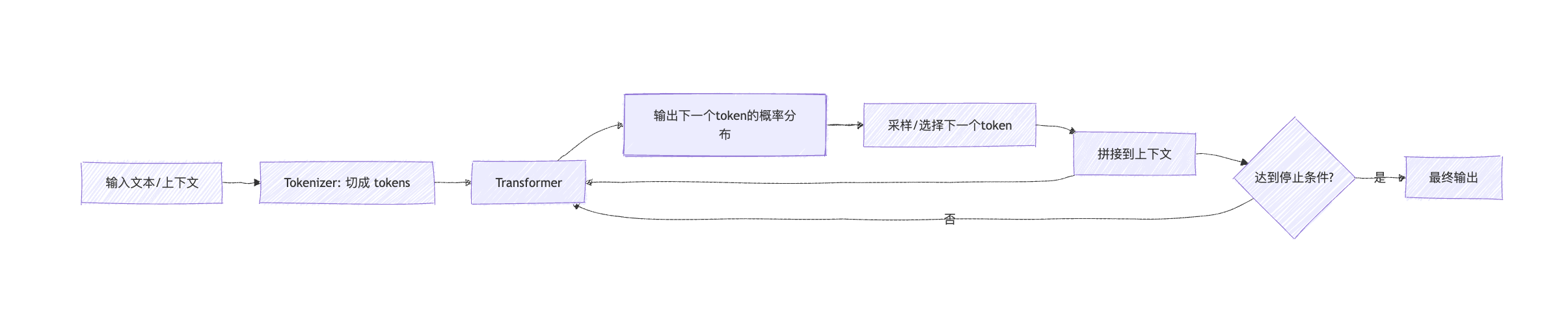
Figure 1: LLM Generation Process (Next-token prediction)
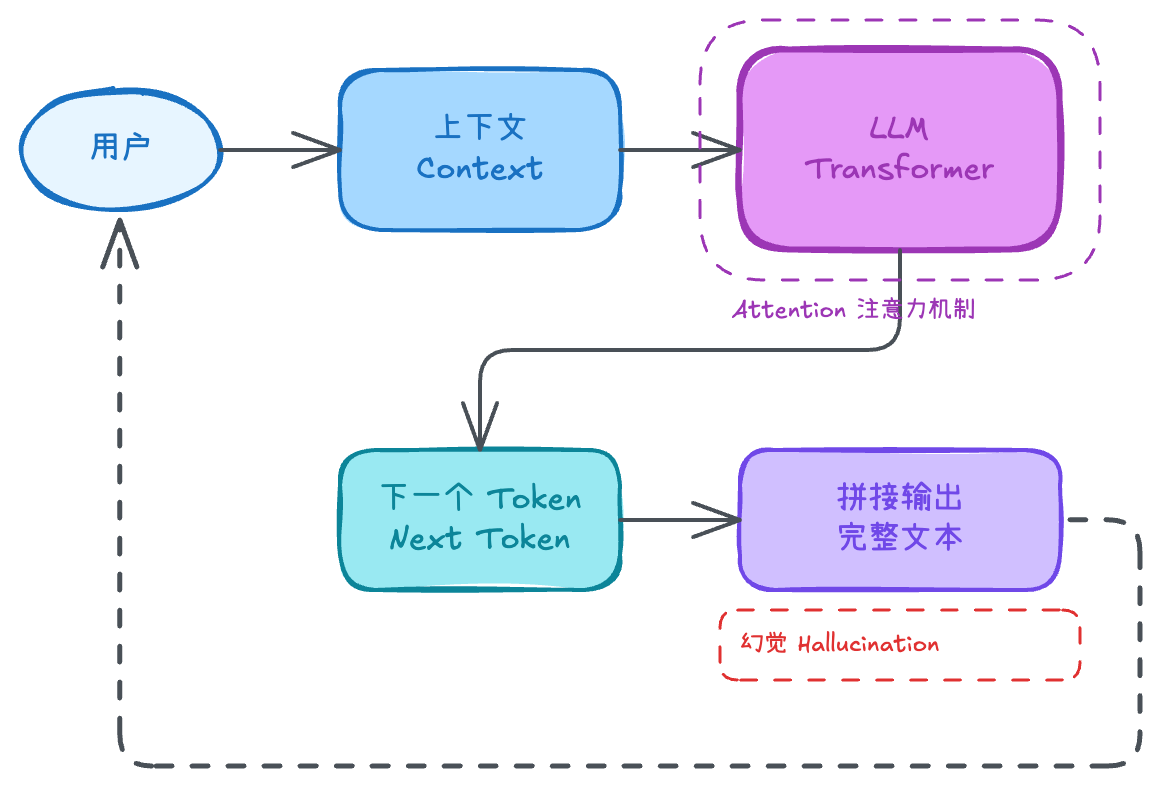
When building with LLMs, remember: an LLM aims to generate the “most likely text,” not to guarantee “factual correctness,” which is why it can produce hallucinations (Hallucination).
2. Function Call: Letting the Model “Call Tools”
Function Call (function calling) lets an LLM output structured parameters (commonly JSON) instead of just natural language. The system then runs the real tool/API and returns the result to the model for summarization.
Figure 2: The Basic Closed Loop of Function Call
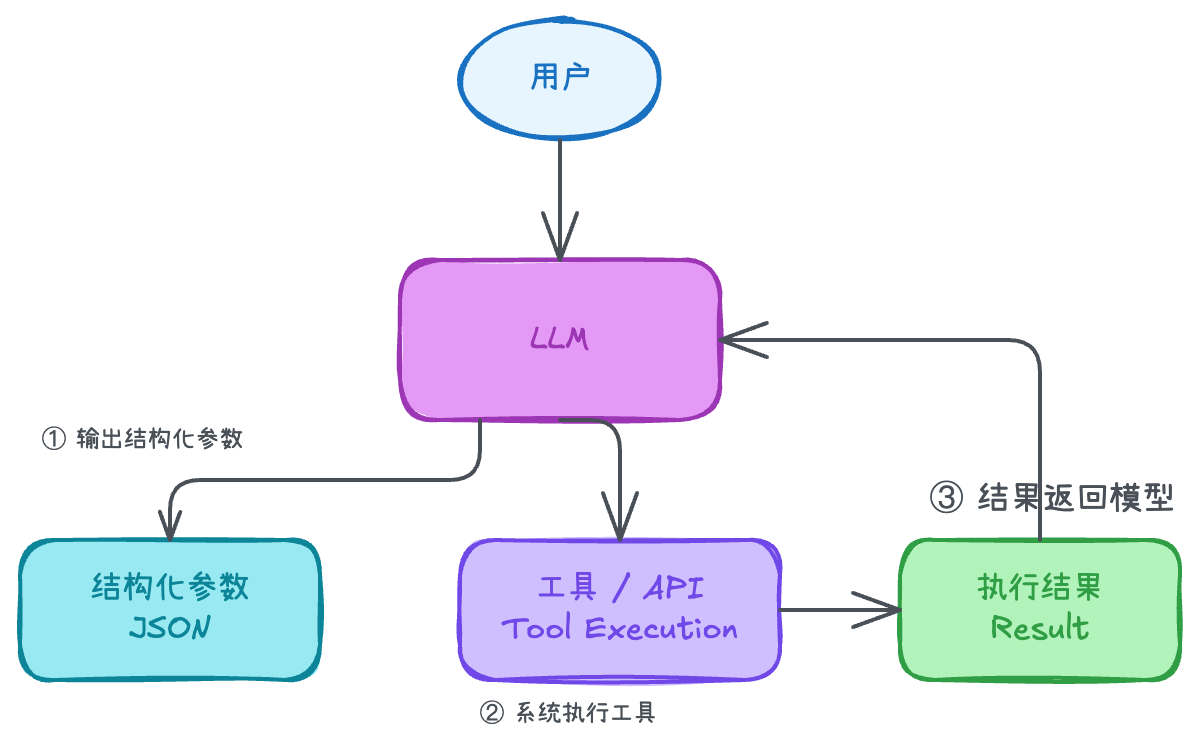
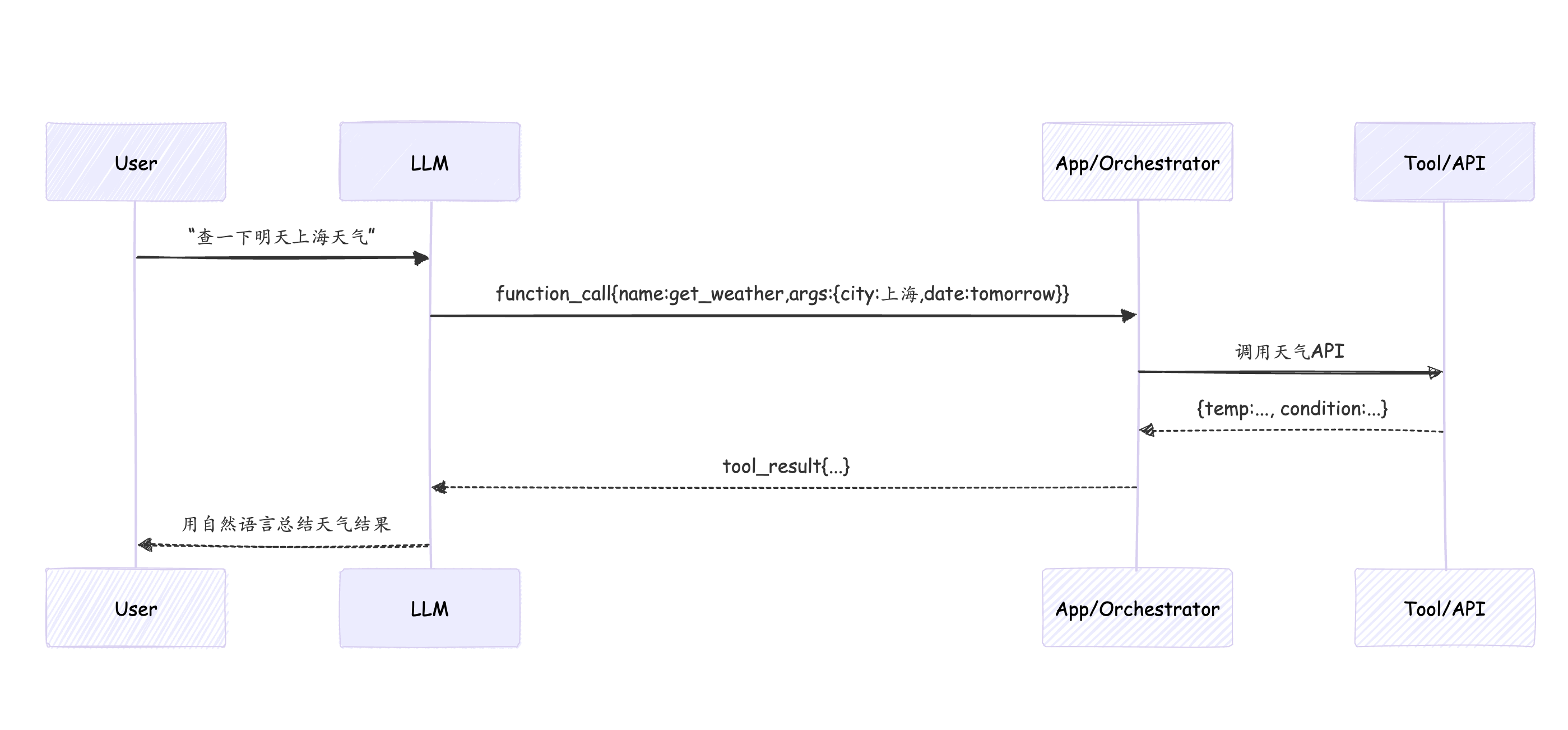
Why it matters:
- Avoids the model making up real-time information
- Outputs can be validated and retried
- Multiple calls can be chained into a workflow
3. MCP: The “Standard Tool Integration Layer” After Function Call
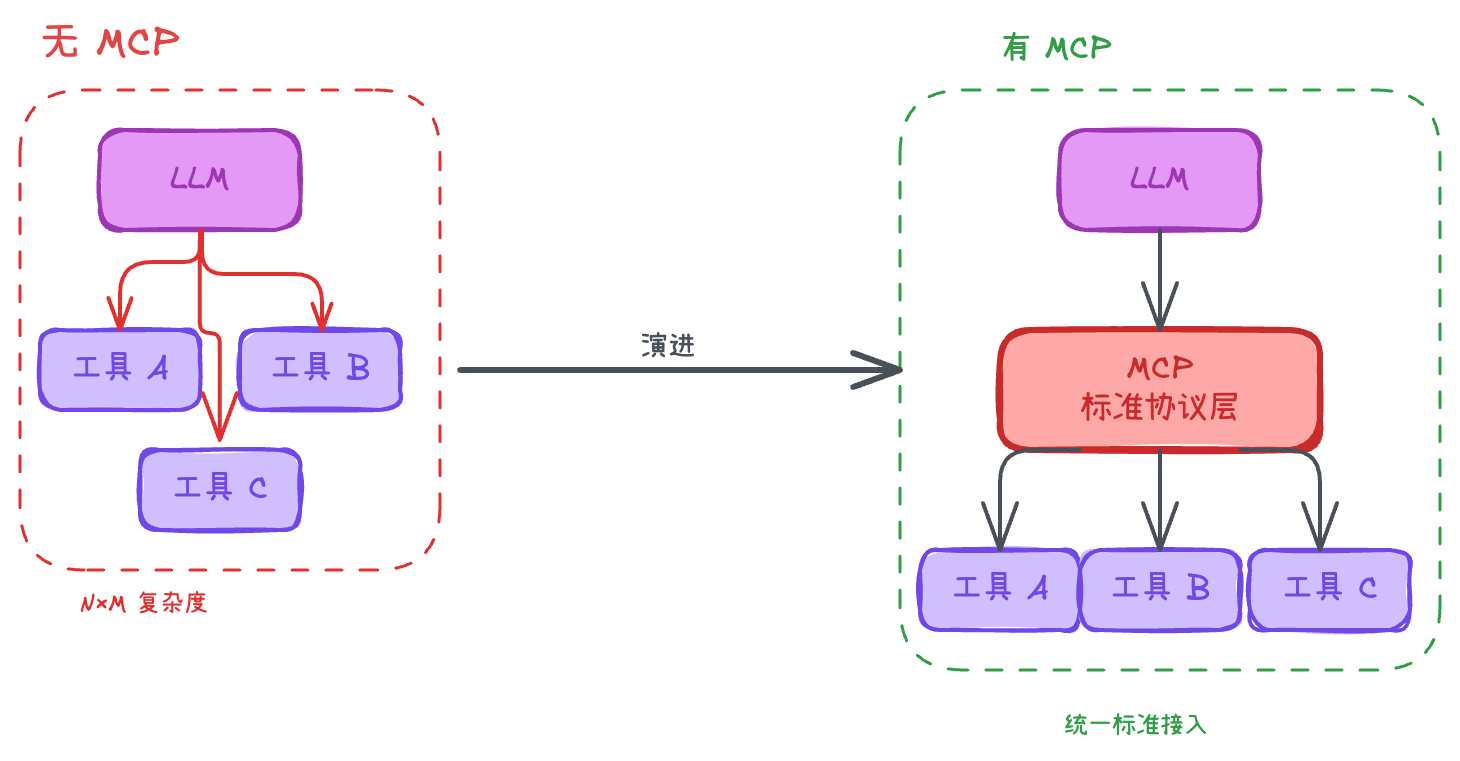
As tools multiply, the hard question shifts from “can we call it?” to:
How do we expose tools to models at scale and in a standardized way?
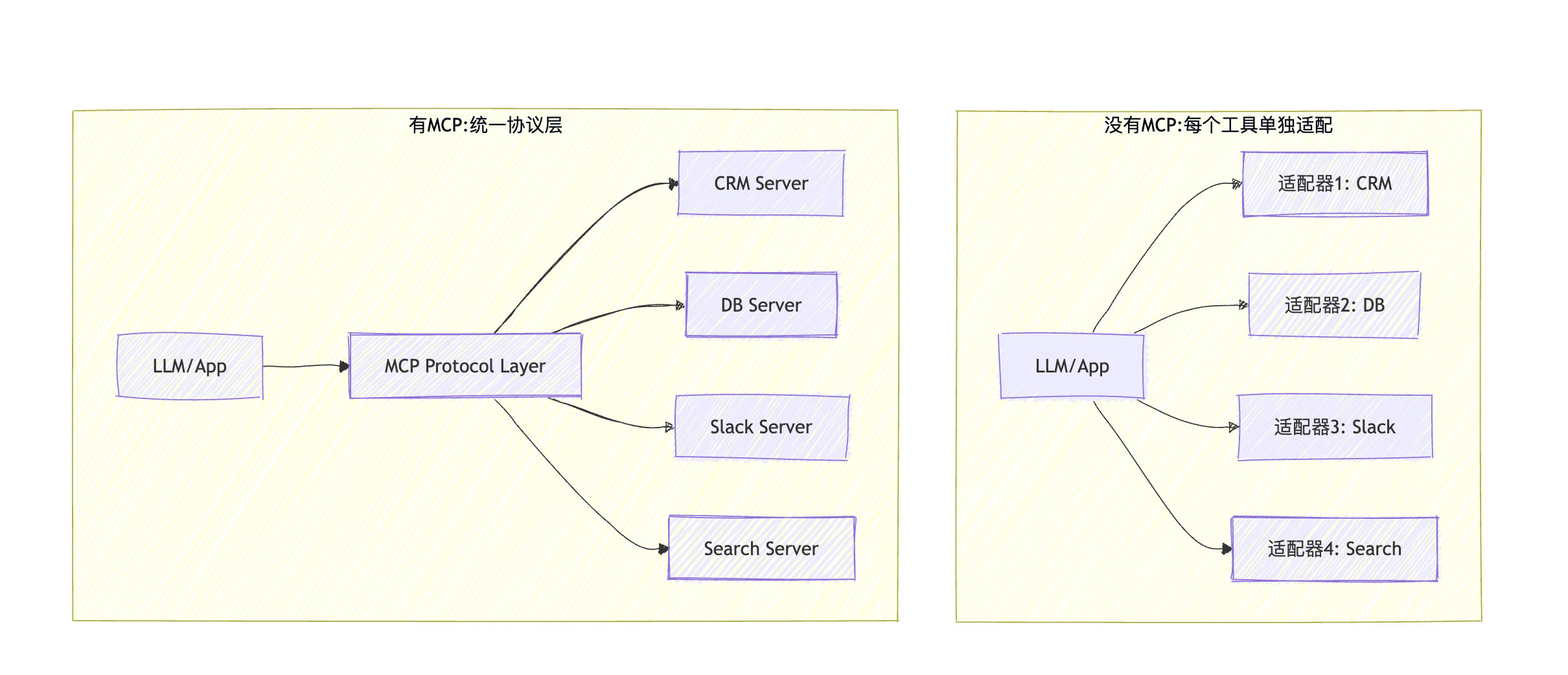
MCP (Model Context Protocol) provides a unified way to expose tools, data sources, and context, letting models discover, understand, and call them consistently.
Figure 3: Without MCP vs. With MCP (Integration Complexity Comparison)
- Function Call is “how to call a tool once”
- MCP is “how to make integrating a whole set of tools standardized, scalable, and manageable”
4. Agent: LLM + Multi-Step Planning + Tool Loop
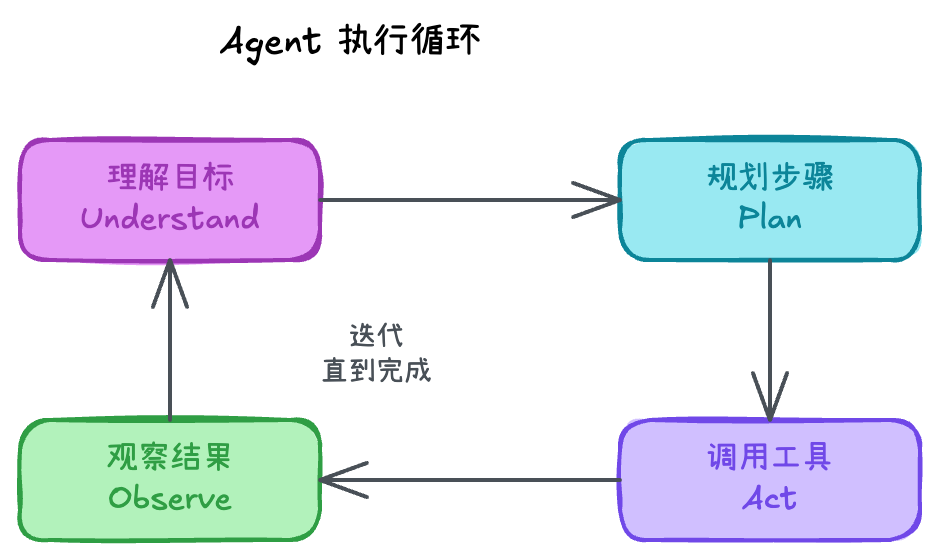
Agent is a system pattern that turns an LLM into a “task executor.” The typical loop is:
- Understand the goal
- Plan the steps
- Call tools
- Observe results
- Iterate until done
Figure 4: Agent’s Multi-Step Execution Loop (Plan-Act-Observe)
The challenges of agents are more like systems engineering: retries after failure, cost control, permissions and security, result validation, and more.
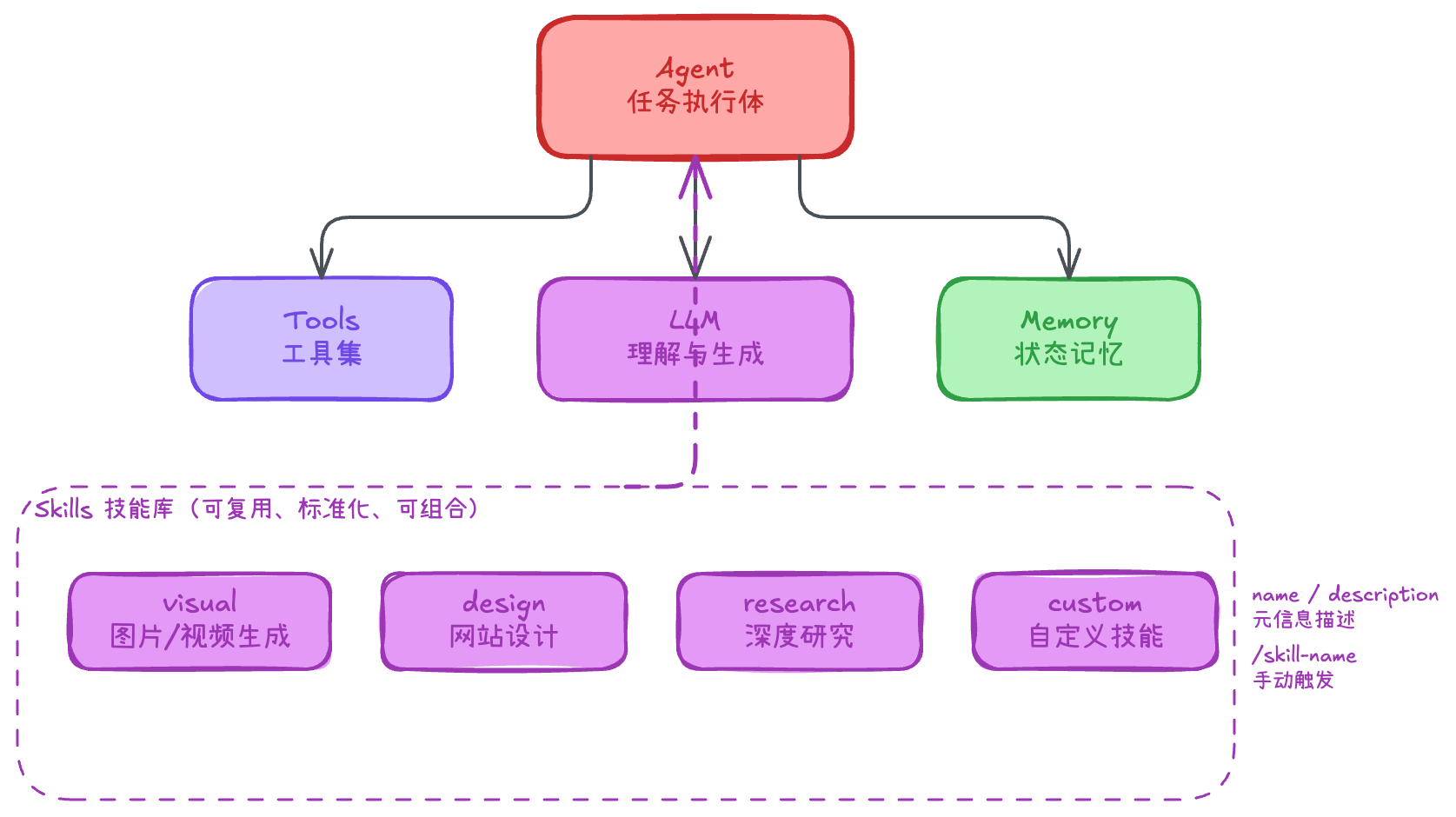
5. Skills: The Agent’s “Reusable Skill Modules” (as Defined in Claude Code)
In the Claude Code ecosystem, a Skill can be understood as:
Writing a type of capability as a standardized “skill manual” so the model can use it automatically when appropriate, or the user can trigger it manually (for example,
/skill-name).
A Skill usually uses metadata such as name/description to describe “when to use it and how,” turning experience into reusable modules and making capabilities more productized and controllable.
Figure 5: Where Skills Fit in the System (Capture and Reuse)

6. Putting It All Together in One Sentence
LLMs handle understanding and generation; Function Call lets them call tools reliably; MCP standardizes tool integration; Agent uses multi-step planning to chain tools into tasks; and Skills codify these capabilities into a reusable skill library, making the system more stable, more controllable, and easier to extend.